
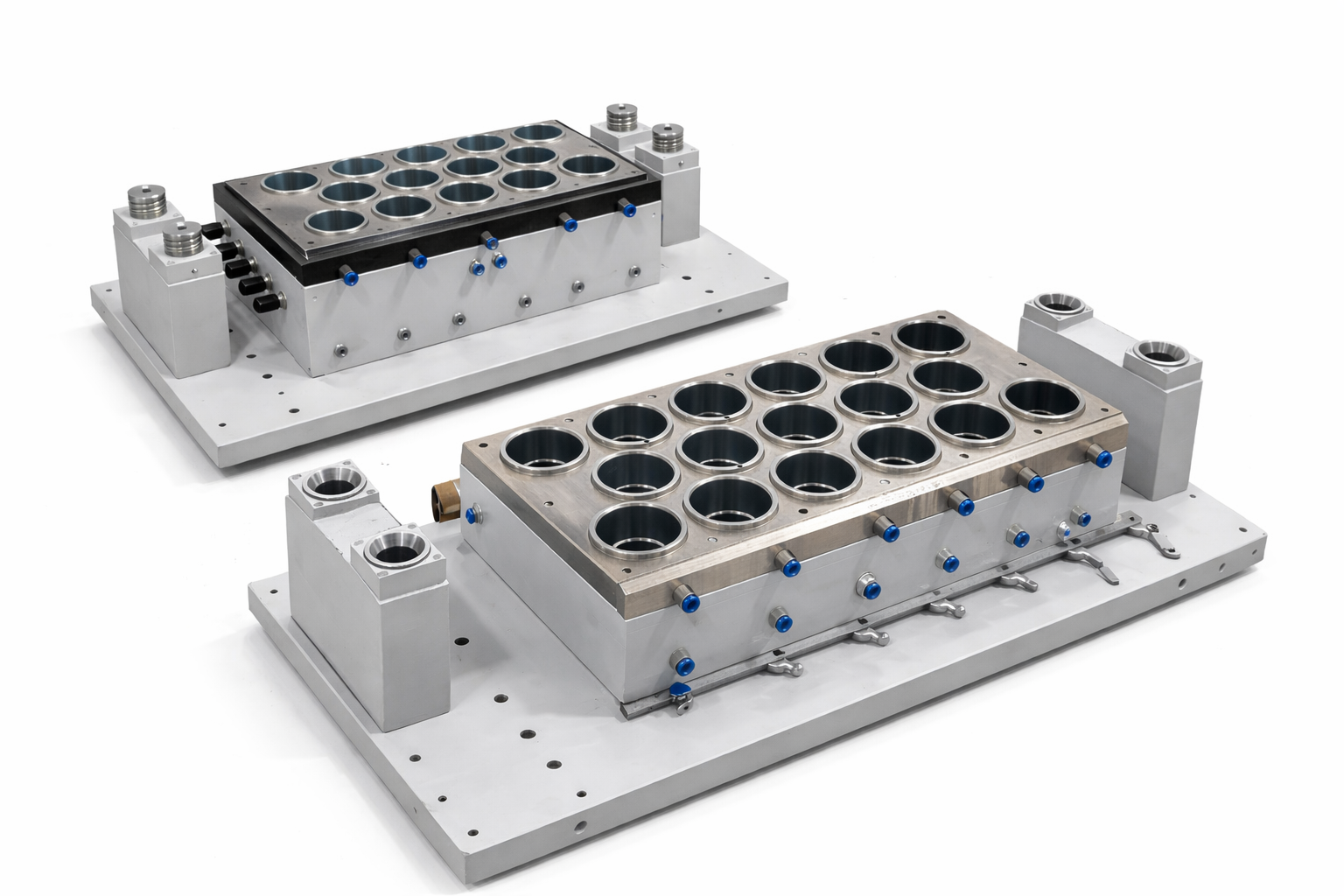
Multi-Cavity Cup Thermoforming Mould
SKU :#P0003
Engineered for high-volume production, this Multi-Cavity Cup Thermoforming Mould ensures exceptional uniformity and a premium finish for beverage and food packaging. Designed with a specialized circular cavity for consistent wall thickness, it is compatible with all standard thermoforming machines and versatile enough to handle a wide range of materials, including PET, rPET, PP, PS, and bio-based resins.
| Feature | Details |
| Mould Type | Multi-Cavity Female/Male Plug Assist |
| Supported Materials | PET, rPET, PP, PS, PLA (Bio-based) |
| Application | Beverage Cups, Dairy Containers, Food Packaging |
| Finish | High-Gloss or Matte (Customizable) |
|
Cavity Geometry |
Circular / Tapered for nesting |
High-Efficiency Production for Packaging Excellence
Our Multi-Cavity Cup Thermoforming Mould is the professional choice for manufacturers seeking to maximize throughput without compromising on quality. Whether you are producing disposable drinking cups, yogurt containers, or food service packaging, this mould provides the thermal stability and precision required for 24/7 industrial operations.
Key Features & Technical Benefits
-
Uniform Cavity Engineering: The multi-cavity layout is precision-machined to ensure that every cup—from the center of the sheet to the edge—maintains identical dimensions and weight.
-
Optimized Circular Design: Specifically shaped to promote even material distribution, reducing "thin spots" and ensuring a consistent finish and structural integrity across the entire cup body.
-
Universal Compatibility: Designed for seamless integration with standard modern thermoforming equipment, allowing for quick installation and minimal downtime during changeovers.
-
Advanced Material Versatility: Optimized for a circular economy, this tooling performs exceptionally with traditional plastics like PP and PS, as well as sustainable alternatives like rPET and bio-based materials.
-
Enhanced Cooling System: Integrated cooling channels are strategically placed to allow for faster cycle times and prevent warping during the ejection phase.